Volume 09
Welcome to the Chasing Ether Fall 2026 release. While this is technically the second release of these two wines, it feels to me more like a maiden release for a couple of reasons. Firstly, my vision for these two bottlings is slowly taking shape. An evolution of an idea, hatched some two years ago in a somewhat cerebral and esoteric way, is slowly evolving and being realised. A feeling of ownership and belonging is taking hold as my identity and the personality of the project continue to mesh. I am having so much fun making these wines!
2025 was a wonderfully balanced vintage, showing how California can walk the tightrope between ripeness and freshness, leaving us winemakers thankful, in love, and in awe of this incredible climate and place. The weather allowed for measured and unhurried harvest decisions. The wines produced are fresh, bright, textured, complex, and delicious. Thank you, Mother Nature!
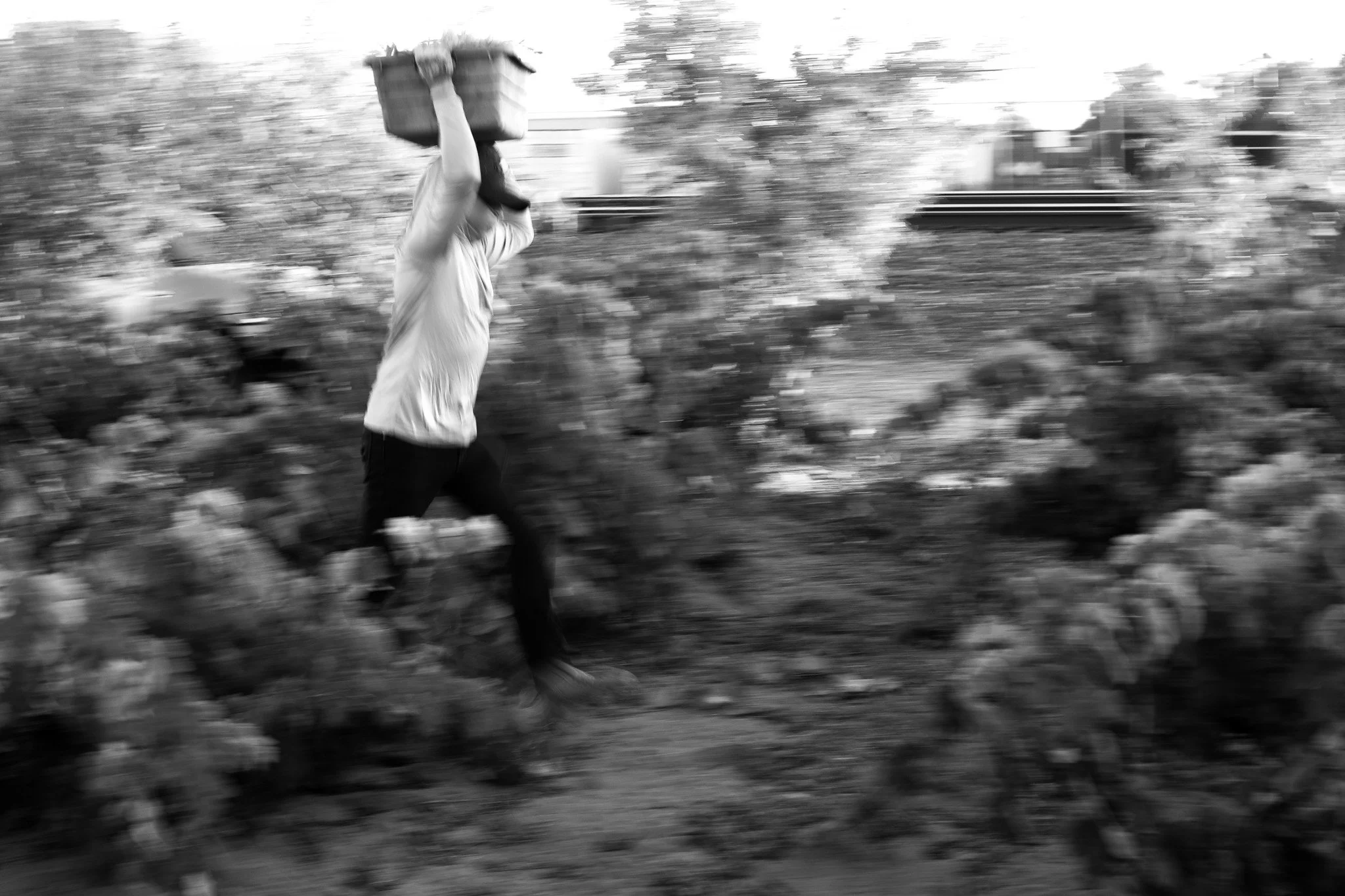
Faster than a speeding train! photo joneberlinfoto
Vol 4.1 / 2
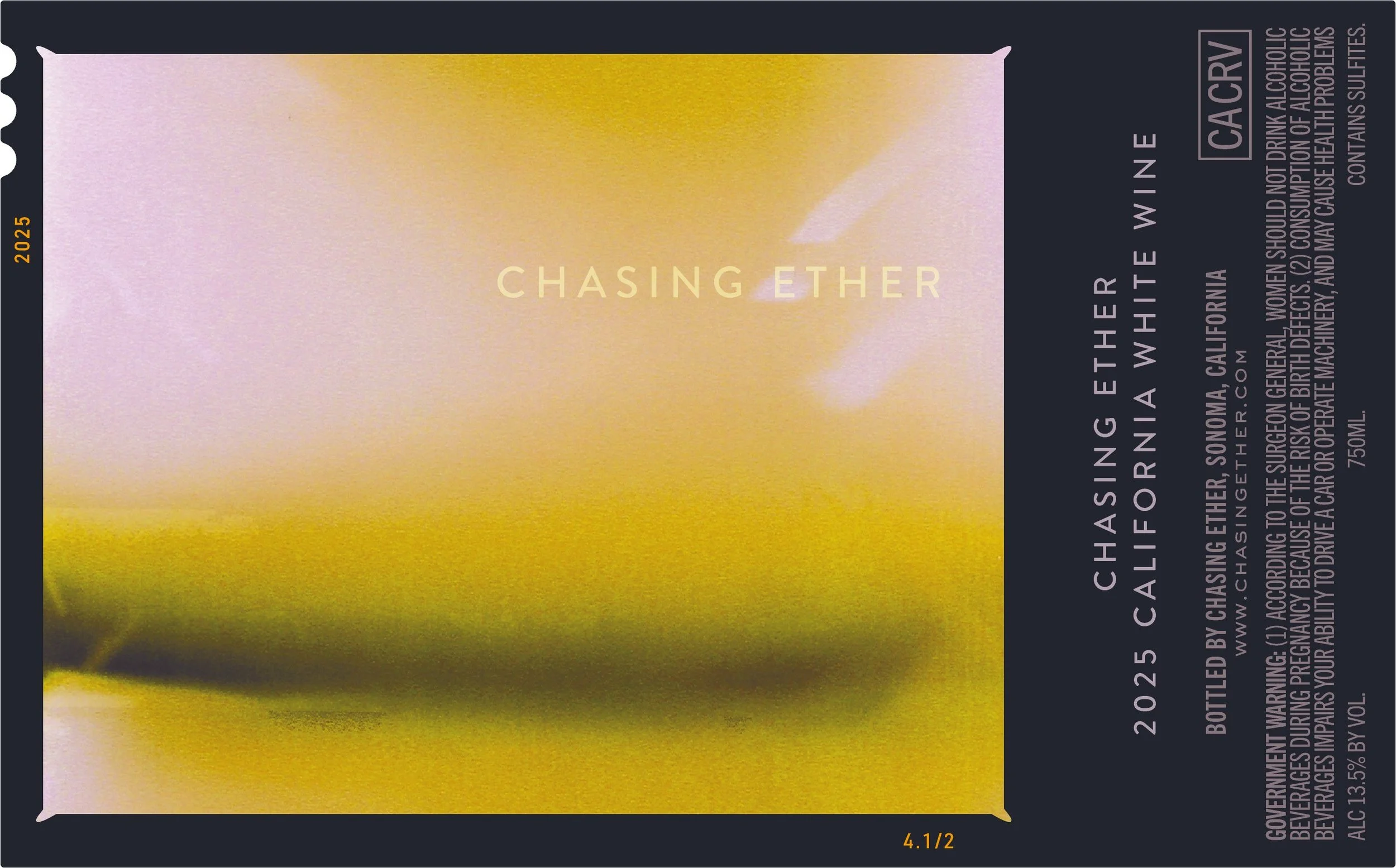
Chasing Ether White Wine 2025
Slowly, this wine is coming together. The inspiration for a Chenin-based white wine on lead vocals, with a crew of backup singers bringing high, and low notes, is rooted in the wonderful wines of Eben Sadie, from South Africa. In particular, his Palladius White blend. That wine reminds me of the Cape of my youth every time I taste it: fynbos, sea air, red dirt, granite mountains, and crunchy stone fruit.
The Chasing Ether White Wine sings a fundamentally California ballad of Central Coast sagebrush, marine layer saltiness, quince, and stone fruits. Of Golden Hour sunsets, when the dry heat of the afternoon dips and refreshes into the chicken skin chill of evening. A blend of 75% Chenin Blanc, 6% each of old vine Palomino and Riesling, 5% mixed white field blend, and 3% each of Grenache Blanc and Picpoul. The Chenin is a blend of six vineyards; two in Lodi, and one each in El Dorado, Cienega Valley, Santa Barbara, and Los Alamos. Here you will find Quince, Bartlett pear, green apple, and camphor. The other components, the “back-up vocals,” bring a combination of candied orange rind, high-toned minerality, viscosity and texture, as well as zippy acids and grip.
The winemaking is uncomplicated and straightforward. Intended to inform and reveal as opposed to overpower. Whole cluster pressing, minimal settling, fermentation in old, French oak barrels, on primary lees, with natural secondary fermentations. Simple and uncomplicated, a light touch, if you will.
The base blend is brought together after six months before being returned to wood for a further three months before bottling. The final alcohol is 13.5%, a sweet spot between richness and elegance, firmly in the “drink me” window. This is richer than the ‘24 (Vol 1.2/2) due to the newer Chenin vineyards, and I think more complex because of the “back up vocal” component. I am so enjoying this wine as the evenings begin to cool off. This is quickly becoming my house pour, and I hope you will feel the same way.
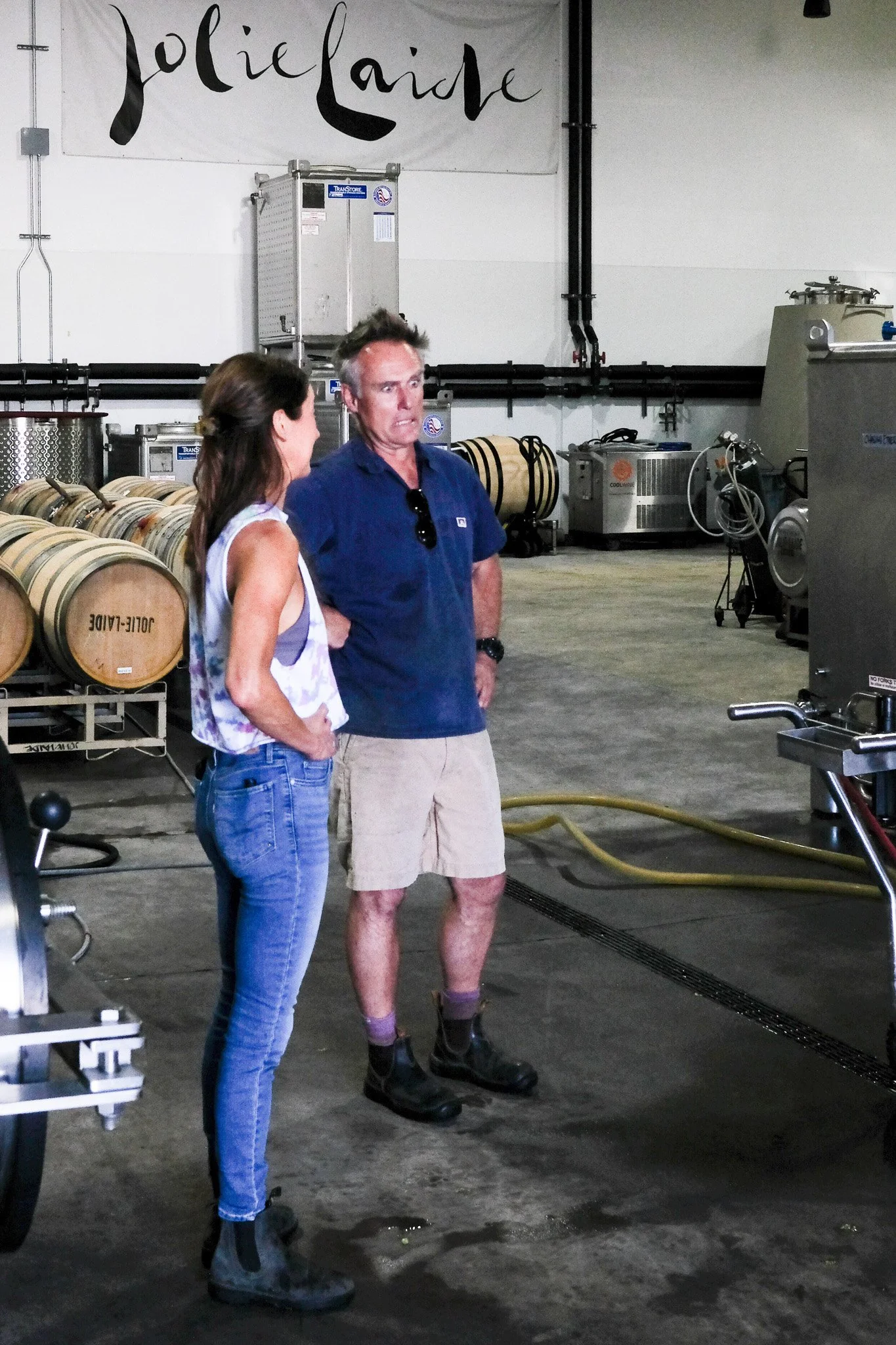
“I am telling you, Jon, people don’t like Chenin Blanc! I certainly don’t, but somehow I like yours.” Jenny from Jolie Laide, where the wines are made, drops some knowledge.
Vol 4. 2 / 2
Chasing Ether Cinsault 2025
Ahh, the light chillable red. The hipster-endorsed darling of the “natural” wine movement. Be careful to judge, I keep telling myself, as my love affair for bright, crisp, round, and delicious light reds continues. This love affair is evolving too, as I delve deeper into vineyards growing Cinsault and, from 2026, Gamay noir.
The Cinsault in 2025 comes exclusively from the Peeps vineyard outside the town of Placerville, in the El Dorado AVA. Alpine light, and granite soils. The foothills of the Sierras stretch magnificently down the inland spine of this state. There is a quality to the light up here that is tangible. The colors of the canopies tend darker green, perhaps due to greater photosynthetic ability. Excessive vine growth is kept in check due to the low vigor of the granite soils. Wine grown on granite or granite-based soil tends to produce perfumed aromatics with dollops of red fruit; raspberry and pomegranate here, with a subtle tone of rhubarb. Tannins are broad and soft but not in a heavy, dense kind of way. The acids are bright but plush and round. This won't make you pucker at the acidity. Instead, it will make you marvel at how plush, light, and refreshing this wine is. It almost drinks like a white but with a touch more texture. The Cinsault is 76% of the blend, while the remaining 24% is Pinot Noir from Lancel Creek in Occidental. High-toned and complex, the addition of coastal Pinot introduces a spice note, firms up the tannins, and lengthens the back end. It is a wonderful combination.
The winemaking makes use of whole cluster fermentation with minimal destemming, native fermentations, cooler fermentation temperatures with 10 days on skins. Pump-overs, two to three times a day, are used before the wine is drained to barrel, still sweet. This allows fermentation to finish off skins, emphasizing the perfume of the wine. The wine is drained to neutral French oak to limit Cinsault's tendency toward oxidation while limiting the introduction of wood flavors. The two lots were blended in tank a month before bottling in June of 2026 for a total of ten months in barrel. The final alcohol is 12.5% but feels weightless and completely invisible. Friends who have tasted this wine are raving about it, and I hope you do too.